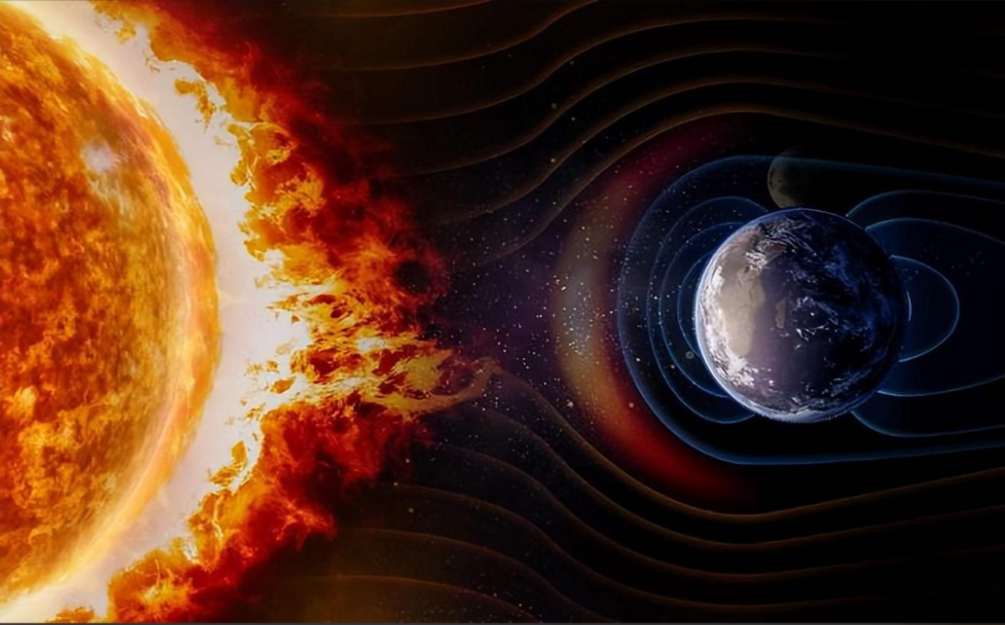
Solar storms can shorten the lifespan of satellites, a phenomenon that has been relatively evident in the recent “Starlink” satellite falling incidents. Here is a detailed introduction:
The principle behind how solar storms affect satellite lifespan: Increased solar activity intensely heats the Earth’s ionosphere, causing the upper layer of the Earth’s atmosphere (the ionosphere) to expand and its density to rise. This multiplies the atmospheric drag in the extremely thin upper atmosphere. Atmospheric drag is proportional to density multiplied by the square of velocity. Satellites travel at speeds of up to 7.8 kilometers per second, so even a small amount of atmospheric drag can have a significant impact, resulting in a notable deceleration effect. This exacerbates the decay of the satellite’s orbit, eventually causing it to fall into the atmosphere and burn up more quickly, thus shortening the satellite’s service life.
Relevant research and data support: A joint team from the University of Maryland and NASA’s Goddard Space Flight Center published a paper stating that due to the current intensification of solar activity, “Starlink” satellites are falling into the Earth’s atmosphere faster than expected. Data shows that between 2020 and 2024, a total of 1,190 low-Earth orbit satellites fell, among which 583 were “Starlink” satellites. In 2024 alone, 316 “Starlink” satellites burned up in the atmosphere. The research team compared the timing of satellite falls with various natural phenomena and found a clear correlation between satellite falls and solar activity.
Differences in the degree of impact on satellites in different orbits: Satellites in high orbits are in a much thinner environment and are far less affected by solar activity disturbances than low-orbit satellites. Low-orbit satellites, such as “Starlink” satellites, whose minimum orbital altitude is approximately over 300 kilometers, are more significantly affected by solar activity. Under normal circumstances, if solar activity is infrequent, satellites at an orbital altitude of over 300 kilometers theoretically have an on-orbit lifespan of about four to five years. However, if solar activity is frequent, the satellite’s lifespan will be greatly affected, and it may enter the atmosphere directly in just one or two months.
Impact on the accuracy of satellite orbit prediction: Solar storms not only accelerate the decay of satellite orbits but also significantly affect the accuracy of satellite orbit predictions. Under normal solar activity conditions, the error in predicting a satellite’s orbit within 24 hours is basically controlled within 100 meters. However, if solar activity is frequent, the actual position of the satellite may differ from the predicted position by as much as about 1 kilometer.