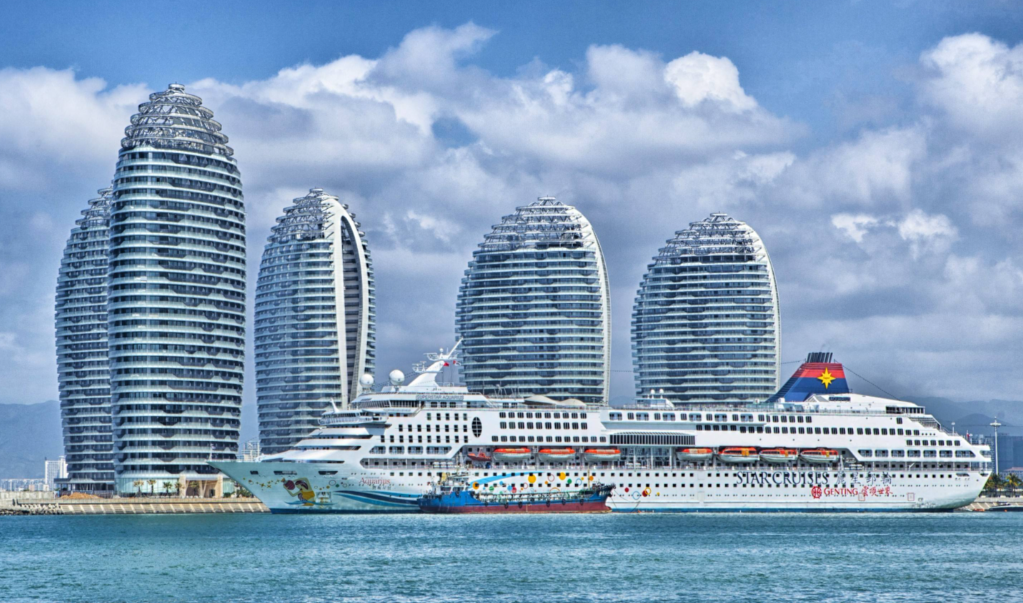
China’s Hainan Free Trade Port will officially launch full-island customs closure operations on December 18, 2025. This major decision marks that the construction of China’s most open free trade test zone has entered the final sprint stage, and the countdown to full-scale operation is about to begin.
As China’s southernmost border region, Hainan Island has a relatively late development history. During the Ming and Qing dynasties, Hainan was under the jurisdiction of Guangdong Province. This administrative pattern did not undergo a fundamental change until April 13, 1988, when Hainan Province was separated from Guangdong Province, and on the same day, the Hainan Special Economic Zone was declared established.
Despite having the largest special economic zone in China in terms of area, Hainan Province’s per capita GDP has failed to exceed the national average for nearly 30 years. Taking 2019 data as an example, Hainan’s per capita GDP was only 75.38% of the national average. Although the development speed has increased in the past five years, this indicator still remained at 79.31% of the national average in 2023, lower than that of provinces such as Sichuan and Liaoning.
It is worth noting that the strategic value of a region and its economic development level are not in a simple linear relationship. At specific historical stages, unique geographical advantages can often be transformed into irreplaceable strategic value. On April 13, 2018, at the important historical node of the 30th anniversary of Hainan’s establishment as a province, the central government made the strategic decision to build a free trade port, endowing this province, which was in its “prime years”, with a new mission.
Why Hainan?
Before the establishment of the Hainan Free Trade Port, China had approved the establishment of 11 free trade test zones successively. After the approval of the Hainan Free Trade Port, 9 more free trade zones were added. However, in terms of openness and policy preferences, Hainan can replicate and implement the new policies and preferential treatments of other free trade zones. But the special policies enjoyed by Hainan may not be allowed to be imitated by free trade zones in other provinces. The Hainan Free Trade Port can be said to be “unprecedented and unrepeatable”.
From the perspective of strategic positioning, the Hainan Free Trade Port can be called “an upgraded version and the highest form of the free trade zone system”, with its opening-up efforts targeting world-class free ports such as Hong Kong, Dubai and Singapore. Then, why did this most valuable “policy dividend” fall to Hainan? This involves multiple factors such as special historical background, international situation and geographical location.
First of all, Hainan has unique geographical advantages. It is backed by the economically developed Guangdong Province and the Hong Kong and Macao regions, and faces ASEAN, China’s largest trading partner. This unique location enables Hainan to have access to both the Chinese and ASEAN markets, covering a huge consumer group of 2.1 billion people. In terms of shipping distance, the voyage from Hainan to Hanoi, the capital of Vietnam, is shorter than that to Guangzhou, and the distance to Singapore, the financial and shipping center in Southeast Asia, is about 430 kilometers shorter than that from Beijing. In addition, a large number of overseas Chinese from Hainan live in Southeast Asia, and this deep cultural bond has greatly reduced the cultural barriers to economic and trade exchanges.
In addition, as a relatively independent geographical unit, Hainan Island’s island characteristics provide natural physical isolation conditions for the implementation of bonded policies and customs supervision, making it an ideal choice for building a free trade port.
From the international perspective, setting up the entire province as a highly open free trade port is also a necessary measure to deal with the “de-globalization” efforts of some Western powers. As China’s important gateway to the South China Sea, Hainan plays an irreplaceable hub role in the strategic channel connecting China with the world.
From the perspective of historical experience, looking back at Hainan’s development process 30 years ago, there are both inspiring brilliant achievements and profound lessons worthy of reflection. In recent years, Hainan Province has successfully curbed the risks of real estate speculation, which is a result of learning from relevant historical lessons and reasonable market regulation.
Polishing for a Decade
Hainan’s success in curbing real estate speculation is just a wonderful footnote in its transformation and upgrading path. In the past five years, although Hainan’s GDP has not achieved a leap-forward growth, the improvement in development quality has been remarkable, and its transformation effect has far exceeded the expectations of the academic community.
In terms of industry, Hainan no longer relies solely on tourism and agriculture, but develops in a diversified direction. Thirteen years ago, Hainan was still perceived as having a low industrial level and a relatively single structure, mainly relying on tourism, tropical agriculture, food processing, supplemented by scattered pharmaceutical enterprises and a lackluster real estate industry.
Today, Hainan has successfully built a four-pillar industrial system: tourism, modern service industry, high-tech industry, and tropical characteristic high-efficiency agriculture. The proportion of these four leading industries has increased by 13.7 percentage points in five years, contributing 67% of the province’s GDP. What’s more noteworthy is that each pillar industry includes multiple sub-fields. The output value of Nanfan seed industry has exceeded 18 billion yuan, the marine industry has maintained a high growth rate of 13.9% annually, and offshore duty-free shopping has accounted for 8% of the global market share.
In addition, Boao has transformed from a seasonal forum venue into a world-class pioneer zone for health and wellness. Sanya has also achieved a gorgeous transformation from a single tourist city to a deep-sea technology and national-level seed industry base, which not only enhances the local economic resilience, but also perfectly aligns with some of the country’s strategic goals.
On the west coast, Yangpu Development Zone, a petrochemical base, continues to extend the industrial chain and improve the value chain. Its port throughput growth rate leads the country’s large seaports, and the registered ship tonnage has jumped to the second place in the country. At the same time, Yangpu and Danzhou focus on cultivating and introducing technology-innovative industries while maintaining industrial diversification.
In terms of science and education, the internationalization of higher education in Hainan Province has accelerated, attracting 20 Sino-foreign cooperative education institutions and well-known overseas universities to run schools independently. Lingshui County has become an “education special zone”. In addition, Sanya alone has gathered at least 6 off-campus research institutes of top domestic universities, including China University of Petroleum, Shanghai Jiao Tong University, and East China Normal University, and a scientific and technological innovation system has taken shape.
In terms of ecological civilization, Hainan leads the country in many indicators. The proportion of new energy vehicles in Hainan ranks first in the country; Boao is about to achieve the goal of carbon neutrality; Yangpu Petrochemical Base innovatively adopts circular economy and clean production technologies, coexisting harmoniously with the adjacent Ocean Flower Island tourist resort.
In terms of opening up, Hainan’s level has continued to rise, and the effect of foreign capital agglomeration has become prominent. In the past 10 years, Hainan Province has achieved a leapfrog development from an “inward-looking economy” to an “open highland”. In the past five years, Hainan Province has utilized a total of 9.78 billion US dollars of foreign capital, with an average annual growth rate of 97%; 8,098 new foreign-funded enterprises have been established, with an average annual growth of 43.7%; the number of overseas tourists doubled last year.
In terms of population structure, the permanent population of Hainan Province has increased by 530,000 in the past five years, which is the growth rate under the background of implementing population control policies in the past two years. Otherwise, the scale of population inflow may have been more significant. Benefiting from the continuous improvement of the ecological environment, the agglomeration of high-value-added industries, and the implementation of preferential personal income tax policies, the proportion of high-level talents has achieved a qualitative leap. It is particularly worth mentioning that the Central Organization Department has selected seven batches of nearly 1,000 outstanding cadres to support Hainan’s construction, and the Central Committee of the Communist Youth League has continuously selected doctoral service teams to help its development.
With the perseverance of “polishing a sword for ten years”, Hainan has consolidated the software and hardware foundation for the on-schedule customs closure operation of the free trade port. After years of continuous efforts, the province’s development has achieved a historic leap. At present, all preparations are basically in place, and it is fully equipped with comprehensive conditions to support the high-quality development of the free trade port after customs closure.
Regional Collaboration
Some people worry that giving Hainan such a high degree of openness will it take away the advantages of Hong Kong, Shanghai, Guangzhou and Shenzhen? In fact, Hainan and the above four cities are not at the same level, and their strategic goals, comparative advantages, leading industries, core functions and radiation ranges are quite different.
The construction of the Hainan Free Trade Port will not weaken the development advantages of economic centers such as Hong Kong, Shanghai, Guangzhou and Shenzhen, but will instead form a significant synergy effect. Hong Kong, with its international high-end service industry system and freely convertible currency advantages, maintains in-depth connection with developed economies such as Britain and the United States. Guangdong Province, relying on its solid industrial foundation and rich international trade experience, has extended its influence to Russia, Africa and other regions. The cooperation project between Shenzhen and Danzhou, Hainan has become a model of regional collaborative development, fully embodying “complementary advantages and mutual benefit”. It is worth noting that Hainan, Guangdong and Hong Kong have proposed a “Golden Triangle” cooperation framework: Hainan’s policies, Guangdong’s industries and Hong Kong’s services.
At the level of regional coordinated development, the cooperation between Hainan and adjacent regions is particularly important. Zhanjiang, Guangdong, as Hainan’s closest neighbor, has a special status in regional cooperation. The two places can focus on developing supporting industries such as tourism coordination and warehousing logistics. For example, Hainan can set up a large “overseas warehouse” in Zhanjiang, which can not only reduce logistics costs, but also create more cooperation opportunities through policy alignment between the two free trade test zones.
Also worthy of attention is the linkage development between the Beibu Gulf region in Guangxi and Hainan. The Beibu Gulf can work with Haikou and other cities to build the Beibu Gulf urban agglomeration. As the core hub of the new land-sea corridor in the west, the Beibu Gulf can strengthen close cooperation with Hainan in shipping. For example, the Beibu Gulf region can play a key transit role in the economic linkage between Hainan and the western hinterland. Due to its small size, Hainan must strengthen the division of labor and cooperation with adjacent regions, promote coordinated development, and maximize the overall benefits.
As China’s most open free trade zone, the Hainan Free Trade Port should shoulder the important task of being a pioneer in opening up and reform in the new era. A high level of opening up will form a strong reverse mechanism, promoting in-depth reforms and optimizing the business environment. Both multinational enterprises and local market entities will choose the most suitable place for their own development to invest and start businesses.
As a new highland of reform and opening up in the new era, the Hainan Free Trade Port is becoming the best test field for various market entities to realize their dreams. For the country, it is a window to show its determination to open up; for enterprises, it is a paradise to share the dividends of reform. We look forward to the Hainan Free Trade Port achieving more breakthrough results in institutional opening-up and injecting new impetus into high-quality development.