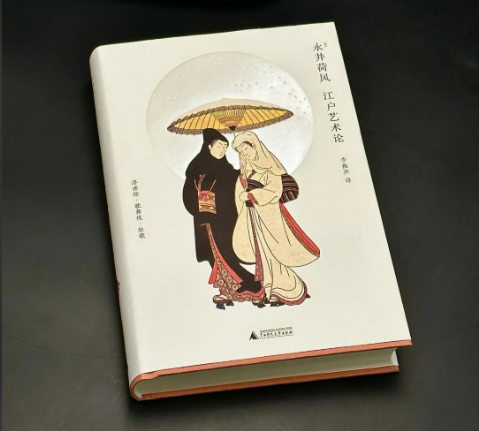
To lay flowers before Nagai Kafū, they ought to be a bunch of white chrysanthemums with morning dew, or a few sprigs of sparsely blooming hydrangeas, carrying the damp breath of Edo’s old dreams.
This writer, who indulged in “illusory beauty” all his life, forever gathered in his words the fragments crushed by the times — the sunset over the Sumida River, the old alleys of Ginza, the patterns on a geisha’s sleeve cuffs, the lingering cadence in a rakugo performer’s throat. Standing amid the clamor of the Meiji Restoration, he stubbornly turned his back on the stormy “civilization and enlightenment,” fixing his gaze only on fading things: paper lanterns at tea houses swaying in twilight, the twang of the shamisen tangled in damp rain threads, even the ambiguity and decadence of the marketplace — all brewed by him into a mellow wine.
He wrote, “Tokyo’s sunset is filthy, yet incomparably beautiful” — a line that mirrors the world of his works: tinged with the smoke and fire of the mortal realm, yet exuding a clear solitude between the lines. He did not chase grand narratives, preferring instead to depict “useless beauties” — perhaps the flash of a hairpin as a geisha turns, or two or three haiku slipping from a tavern on a rainy night. These 细碎的光影,solidified into eternal amber in his words, allow us, a century later, to still feel the warmth of that Tokyo where old and new intertwined.
No words are needed when laying the flowers; let only the bitter fragrance of the petals blend with the sandalwood, tobacco, and the musty scent of rainy alleys in his prose. He spent his life maintaining a gentle distance from “modernity,” like a quiet grave keeper, erecting monuments to forgotten beauties. This bouquet is meant for that stubborn loneliness, for that figure in the torrent of time, forever gazing at “vanishing things.”
When the wind passes, petals fall on his letters, like the unspoken sighs in his writing — beauty is fleeting, yet the gaze upon beauty is enough to resist the desolation of time.