This has once again made Trump look like a fool.
The day before, Trump had claimed that under his strong pressure, he “heard” that India would no longer buy oil from Russia, and he would “wait and see”.
The next day (August 2nd), two anonymous senior Indian officials stated that the Indian government’s policy had not changed, and India would continue to buy Russian oil as usual.
I noticed that some Western media ran headlines like, “India defies heavy U.S. tariff pressure, will continue to buy Russian oil”.
Indian officials said that the Indian government has “never instructed oil companies to reduce imports from Russia”, and “these are long-term oil contracts that cannot be stopped overnight”.
From what I’ve seen, the source of the news was Reuters, which called it an “exclusive report” claiming that India would no longer buy Russian oil. One basis for this was that several state-owned refineries in India had not purchased Russian crude oil in the past week.
But according to the Indian side, the reduction in purchases was not due to Trump’s threats, but rather factors such as reduced Russian exports, stable Indian demand, and lower discounts on Russian oil.
Earlier, Trump sharply criticized India for being dishonest in continuing to buy Russian oil, announcing a 25% tariff on India and threatening additional penalties.
In addition, he also threatened Russia, saying that if it did not reach a ceasefire with Ukraine within 10 days, the U.S. would impose so-called secondary sanctions, levying a 100% tariff on anyone who bought Russian oil.
Anyway, in Trump’s eyes, tariffs are a panacea, and nothing can be done without them.
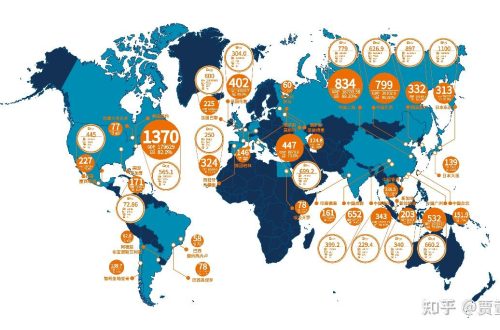
Who is buying Russian oil? According to external sources, the three main buyers are China, India, and Turkey.
Currently, India is the world’s third-largest oil importer, after China and the United States, and Russia is also India’s largest oil supplier.
Data shows that in January 2022, India imported 68,000 barrels of oil per day from Russia; by June of the same year, this had increased to 1.12 million barrels per day; at its peak, it exceeded 2 million barrels per day, sometimes even more than China.
Discounted Russian oil accounted for up to 40% of India’s oil imports.
Just imagine, what impact would cutting off Russian oil have on India’s oil supply and the entire Indian economy?
Trump thinks India is a soft target, and with a little pressure, India will obediently stop importing. He really is overthinking.
The United States and India have a good relationship. In the past, when Trump met Modi, they would hug and hold hands. But India’s relationship with Russia is even longer and deeper.
During the Cold War, don’t forget that the Soviet Union was always India’s quasi-ally. The U.S. and China sided with Pakistan, while the Soviet Union sided with India. Most of India’s weapons came from the Soviet Union, and the Soviet Union even used its veto power multiple times for India on the India-Pakistan issue.
Putin and Modi are old friends who have met dozens of times. Indian Foreign Minister Subrahmanyam Jaishankar praised the India-Russia relationship as “an immutable constant in world politics”.
I’ve seen Western media comment that India and Russia’s deep interdependence in multiple strategic areas such as energy, military, nuclear energy, and high-level diplomacy form a solid foundation that is difficult to break with a single economic lever like tariffs. This means that the U.S.’s “additional punishment” may not be enough to fundamentally change India’s strategic considerations, because cutting these ties would come at a huge cost to India.
Therefore, even if it means slapping Trump in the face, India has to clarify: we will continue to buy Russian oil as usual.
Earlier, Trump claimed that it was his active mediation and pressure that finally led to a ceasefire between India and Pakistan. This made India furious. India resents ceasefires under pressure the most, and Trump just had to bring up the most sensitive issue.
In the end, India publicly clarified that the ceasefire had nothing to do with Trump. Many Indians even angrily called Trump a liar.
For Trump, who has long coveted the Nobel Peace Prize, this was undoubtedly another public slap in the face.
Previously, Trump also claimed: I don’t care how India treats Russia; the two of them can join hands to ruin their respective dying economies…
I saw that the Indian Prime Minister’s Office issued a statement in response: “The Indian economy is full of vitality and resilience”, and “Modinomics is not only alive but also the only bright spot in a world fragmented by protectionism”.
Isn’t this another slap in the face to Trump?
First, Trump is really overthinking.
He imagines that with a little pressure from him, India will stop purchasing Russian oil. One really wonders what Trump is thinking.
There are things that tariffs can affect, but there are relationships where tariffs really don’t play a big role.
But this has put Trump in an awkward position. How will he fulfill his promises next?
If he can’t impose “additional sanctions” on India, then his so-called sanctions against Russia are just empty words; if he can, then U.S.-India relations will undergo major changes.
Of course, for Trump, if all else fails, he can just change his wording. Anyway, he will definitely claim victory, a resounding victory, and India is no match for him.
Second, the strategic balance is being broken.
India used to have an illusion that it could play both sides. It was in a geopolitical “sweet spot”: on the one hand, it engaged in the Quad cooperation, getting along well with the United States, Japan, and Australia; on the other hand, it was a BRICS member along with China and Russia.
“This allowed Modi to be a guest at the White House and also visit Russia to deepen cooperation with Putin. However, Trump is breaking this strategic balance.”
Of course, we shouldn’t avoid the fact that India has long been a chip for the West to contain China, and some Indians are even happy to be this chip, offering various tokens of loyalty.
Who knew that when Trump came to power, he didn’t care about so-called chips at all. You’re just a pawn, and if you don’t do what he says, he’ll insult you severely. India’s myth is being shattered.
Third, villains are bound to clash.
India is no pushover, and Modi is a veteran at geopolitical games; of course, Trump doesn’t believe in fate and won’t stop until he gets his way.
It’s like a match between two masters, with Modi’s “win philosophy” pitted against Trump’s “win philosophy”. It’s a case of villains clashing.
India’s relationship with Canada is very bad, but India and Canada have become fellow sufferers.
Canada has been frustrated recently: the U.S. tariff on Japan, South Korea, and the EU is 15%, but Canada, which has always been willing to go all out for the U.S., was the first to be stabbed in the back by Trump with a 35% tariff.
Brian Crow, a former Canadian government official, lamented that other countries chose to compromise with the U.S., leaving Canada “fighting alone”. “It’s a pity that now, like China, Canada has become the only country the country that dares to confront this president (Trump)”. Will India join this ranks?