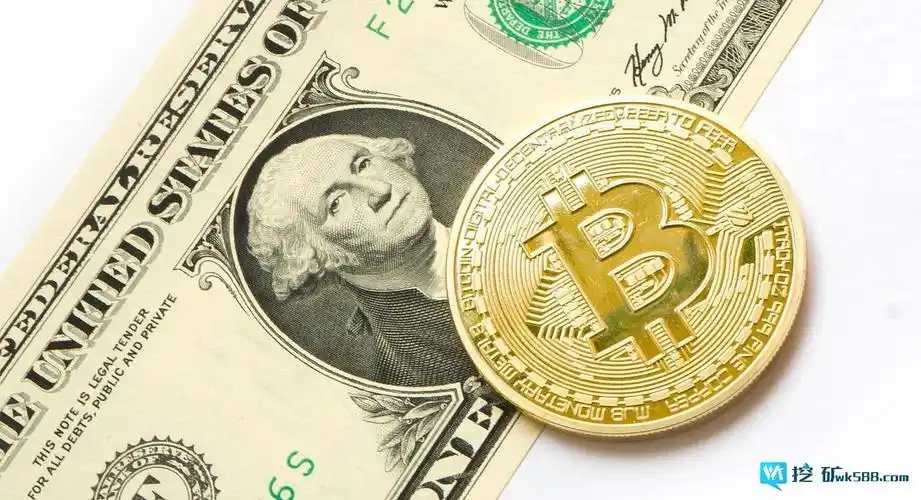
The “shrinking” of currency essentially refers to a decline in the purchasing power of money — the same amount of money can buy fewer goods or services. This phenomenon is known as inflation in economics. It is the result of the combined action of various economic factors, which can be analyzed from the following core dimensions:
I. Money Supply: “More money, but goods don’t keep up”
The purchasing power of money directly depends on the ratio between the “total money supply” and the “total amount of social goods/services”. When the speed of money issuance far exceeds the actual output of the economy, the amount of goods corresponding to each unit of money will decrease, which in turn leads to “money being less valuable”.
Active over-issuance: To stimulate the economy, central banks may increase the money supply through interest rate cuts, quantitative easing (such as the Federal Reserve’s bond purchases), etc. For example, during the global pandemic in 2020, many countries implemented large-scale monetary easing. The United States alone increased its money supply by more than $5 trillion from 2020 to 2021, directly pushing up subsequent global inflation.
Credit expansion: A surge in bank lending will also lead to an increase in the total money supply. If enterprises and individuals borrow excessively for investment (such as in real estate or the stock market), and the funds do not flow into the real economy to create goods but instead push up asset prices, it may eventually be transmitted to consumer goods prices.
II. Demand-Pull: “Everyone wants to buy, but there aren’t enough things”
When total social demand (consumption, investment, government spending) exceeds total supply, goods are in short supply, and prices naturally rise, forming “demand-pull inflation”.
Consumption side: During periods of economic prosperity, residents’ incomes grow, employment is stable, and consumption willingness increases (such as concentrated shopping during holidays, hot sales of luxury goods), which may lead to a short-term shortage of goods. For example, a certain type of internet-famous product suddenly becomes popular, and manufacturers cannot produce enough in time, causing prices to rise accordingly.
Investment side: When enterprises expand production and increase investment (such as building factories, hoarding raw materials), it may push up the prices of means of production such as steel and energy, which are then transmitted to downstream consumer goods.
Government spending: Large-scale government infrastructure projects, welfare subsidies and other policies will increase the amount of money in circulation in the market. If the projects do not promptly translate into social supply, they may trigger inflation.
III. Cost-Push: “Production becomes more expensive, so goods have to be sold more expensively”
Rising costs of production factors (raw materials, labor, rent, etc.) prompt enterprises to increase commodity prices to maintain profits, forming “cost-push inflation”.
Raw material price increases: Prices of bulk commodities (oil, grain, minerals) fluctuate due to international situations, climate and other factors, directly pushing up the costs of the production chain. For example, the Russia-Ukraine conflict in 2022 caused a surge in global wheat and natural gas prices, and the prices of end products such as bread and chemical fertilizers rose accordingly.
Rising labor costs: When labor is in short supply (such as population aging, skill gaps), rising wages will increase enterprises’ labor costs. For example, rising salaries in the service industry in developed countries have led to higher prices for catering, housekeeping and other services.
Supply chain costs: Logistics disruptions (such as port congestion during the pandemic, changes in transportation routes due to geopolitical conflicts) will increase the circulation costs of goods, which are ultimately reflected in the selling prices.
IV. External Input: “Global inflation is ‘transmitted’ in”
In the context of globalization, inflation in one country may be “imported” into other countries through international trade and capital flows.
Price increases of imported goods: If the prices of imported energy, grain, and core components rise, it will directly lead to price increases of related domestic goods. For example, Japan relies on imports for more than 90% of its energy. Rising international oil prices will quickly push up domestic electricity prices and transportation costs in Japan.
Exchange rate fluctuations: A depreciation of the local currency will make imported goods more expensive. For example, if a country’s currency depreciates by 10% against the US dollar, imported goods that originally cost $100 will require 10% more local currency to purchase, thereby pushing up prices.
V. Expectations and Psychology: “The more people think prices will rise, the more likely they are to rise”
Inflation expectations have the characteristic of “self-fulfillment”: if people generally believe that prices will rise in the future, they will hoard goods in advance (such as residents snapping up rice, flour, and oil), and enterprises will raise prices in advance (to avoid higher costs later), which will accelerate the current price increase.
For example, if there is a rumor in a certain area that “fertilizer prices will rise soon”, farmers will rush to buy fertilizer, leading to a short-term surge in demand. Merchants will take the opportunity to raise prices, and eventually the “rumor” will become a reality.
Summary: Currency shrinkage is a comprehensive result of “multiple causes leading to one effect”
The decline in the purchasing power of money is rarely caused by a single factor, but is the product of the interplay of factors such as excessive money supply, supply-demand imbalance, rising costs, external shocks, and psychological expectations. The dominant factors vary in different scenarios: sometimes it is “too much money printed” (such as hyperinflation in Zimbabwe), sometimes it is “too few goods” (such as material shortages during wars), and sometimes it is “global price increases” (such as the global energy crisis in 2021-2022).
Understanding this logic can help us more clearly view the phenomenon of “not having enough money to spend” in daily life — it is not only a problem of personal wallets, but also a “barometer” of the operation of the entire economic system.