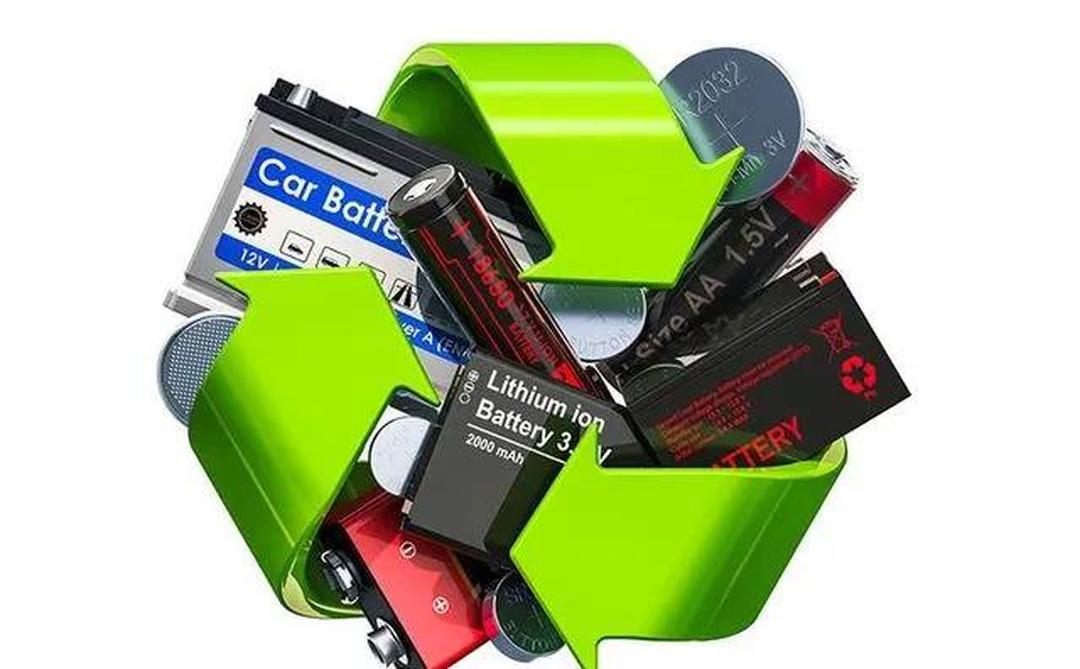
Against the backdrop of continuously improved policies and evolving technologies, the industrial landscape of power battery recycling is accelerating its reshaping, moving towards standardization, specialization, and scaling, with an overall positive development trend. However, in the process of rapid advancement, the industry still faces many practical challenges, such as prominent recycling chaos, restricted cascade utilization, and fluctuations in recycling economy. How to break the deadlock in the recycling and reuse of power batteries? Recently, at the seminar on “Promoting High-Quality Development of the Power Battery Recycling Industry” hosted by the China EV 100 and supported by the Natural Resources Defense Council (NRDC), industry experts and enterprise representatives conducted in-depth discussions on the current situation of the industry, the challenges faced, and solutions.
Initial Establishment of Recycling System
Currently, the ownership of new energy vehicles in China is rising rapidly. The latest statistics from the Ministry of Public Security show that as of the end of June 2025, the national car ownership reached 359 million, among which the ownership of new energy vehicles was 36.89 million.
Liu Xiaoshi, Executive Deputy Secretary-General of the China EV 100, pointed out that with the rapid development of the new energy vehicle market, China’s power batteries have gradually entered the stage of large-scale retirement, and it is expected that the total retirement volume will exceed 200GWh by 2030. Proper recycling and disposal of a large number of scrapped power batteries have become the key to ensuring resource security and promoting the green transformation of the industry.
At present, China’s power battery recycling system has been initially established, laying the foundation for industrial development. According to the website of the Ministry of Industry and Information Technology, a total of about 15,000 power battery recycling service outlets have been built nationwide.
Meng Qingyao, a researcher at the China Automotive Strategy and Policy Research Center of the China Automotive Engineering Research Institute, introduced that the national level has issued a number of policies to promote system construction, initially establishing a policy framework with the extended producer responsibility system as the core; the central and local governments have actively explored, with the central government introducing supporting policies for power battery recycling, and some localities setting up fund reward mechanisms to encourage the development of “white list” enterprises and high-value demonstration projects. At the technical level, China has formed a recycling system mainly based on hydrometallurgy, and some leading enterprises have a recovery rate of nickel, cobalt, and manganese metals exceeding 98%, reaching the international leading level.
Enterprises are also actively exploring and practicing. Take NIO as an example, Shu Dailong, head of its battery asset management, said that the company’s BaaS battery rental model has built a closed-loop recycling capability through three modules: “vehicle-battery separation” technology, battery full-life cycle monitoring platform, and BaaS battery rental service. Among them, “vehicle-battery separation” can realize centralized recycling and large-scale processing of retired batteries; relying on technologies such as digital twins, full-life cycle digital monitoring can accurately manage battery assets; the BaaS model allows asset companies to uniformly dispose of retired batteries, with eligible ones undergoing cascade utilization and the rest being disassembled and recycled. It is reported that currently, the battery asset company under the NIO system holds nearly 30GWh, and the recovery rate of accident batteries exceeds 98%, providing an example for car companies to implement the extended producer responsibility system.
Recycling, Cascade Utilization, Overseas Layout: Multiple Challenges Facing the Industry
Despite the progress made in the industry, challenges cannot be ignored. Meng Qingyao pointed out that there are three prominent problems in the current industry:
First, the industry presents a “small, scattered, and chaotic” situation, and the built comprehensive utilization capacity of power batteries exceeds the actual processing demand of retired batteries. At the same time, the industry access threshold is low, there are many non-“white list” enterprises, and most of them are not included in the management of relevant departments, making supervision difficult. Up to now, the Ministry of Industry and Information Technology has announced 5 batches of “white list” enterprises totaling 156, but according to Qichacha data, there are more than 100,000 enterprises related to battery recycling and utilization in China.
Second, the recycling channels are blocked and the market is irregular. Automobile manufacturers are unable to grasp the flow of retired batteries, and the actual recycling volume is limited; battery owners pay more attention to economic interests and ignore the qualifications of disposal enterprises; group enterprises mostly sell waste power batteries through bidding, leading to “the highest bidder wins”, and there is no management basis to require them to deliver batteries to “white list” enterprises, indirectly causing waste batteries to flow into irregular channels. In addition, formal enterprises need to bear costs such as safety, environmental protection, technology, and compliance operations, while “small workshops” have low recycling costs and can snatch resources at high prices, leading to the dilemma that formal enterprises “have no batteries to recycle”.
Third, the application requirements for cascade utilization are becoming stricter. In the fields of energy storage and electric bicycles, tightened policies and standards have restricted the large-scale application of cascaded batteries; at the same time, the industry threshold has increased, putting forward higher requirements for production capacity and product compliance, and the market prospects and technical paths of cascade utilization still need further exploration.
Participating enterprises generally believe that there is disorderly competition in the current power battery recycling industry, and “the highest bidder wins” has become an unspoken rule of transactions. Jiao Yawei, Executive Vice President of Tianjin Battry Technology Co., Ltd., pointed out that the peak of retired power batteries has not yet arrived, and the number of batteries is limited, but a large number of recycling enterprises have poured in, with mixed quality, resulting in a competitive situation of “too many monks and too little porridge” and “bad money driving out good money” in the market.
Regarding the difficulties in cascade utilization, Li Zhengrong, Senior Director of Policy and Regulations at Sunwoda, believes that the root cause lies in insufficient standards and supervision for cascade utilization, inadequate application scenario specifications and safety assessments, especially the difficulty in ensuring the quality of cascaded batteries, coupled with the difficulty in traceability due to property rights transfer, which further increases the difficulty of supervision.
In addition, many guests mentioned the difficulties in overseas recycling layout, especially the issue of black mass imports. In June this year, the Ministry of Ecology and Environment and other departments jointly issued the “Announcement on Matters Concerning the Administration of Imports of Recycled Black Mass Materials for Lithium-Ion Batteries and Recycled Iron and Steel Materials”, marking that the import of recycled black mass for lithium batteries has become compliant. However, Li Zhengrong pointed out that although China allows the import of black mass, the EU has begun to restrict the export of black mass, which will aggravate the risk of outflow of China’s key mineral resources.
Multi-Party Collaboration to Build a Recycling Closed Loop
In response to the existing problems in the industry, participating experts and enterprise representatives put forward suggestions from multiple dimensions such as policy, technology, and market:
At the policy and supervision level, Zhang Yuping suggested strengthening cross-departmental joint law enforcement, establishing a blacklist and joint punishment mechanism, requiring non-compliant enterprises to rectify within a time limit or exit in an orderly manner, and curbing industry chaos; improving the full-life cycle traceability system of batteries, relying on national platforms to force enterprises in production, sales, recycling and other links to access data, realizing closed-loop supervision of “one code to the end”, and promoting the standardization and transparency of the industry; in terms of cascade utilization, strictly controlling product quality through mandatory standards, curbing the root causes of illegal chaos, and establishing benchmarks for excellent enterprises and products, creating an industry atmosphere that encourages innovation, standardized development, and safety first.
Jiao Yawei called on the national level to clarify the proportion of recycled materials in battery production and the carbon emission threshold standards for products, set a phased promotion schedule, and guide enterprises to gradually expand applications; implement “proportion substitution” for cascade utilization, set an increasing proportion year by year, and promote the orderly development of the industry under the premise of ensuring safety; sink the implementation of relevant standards and policies to the provincial and municipal levels, establish an enforceable and supervisable management system according to provincial units, and promote the closed-loop operation and collaborative development of the industrial chain within the region.
At the technical and innovation level, Liu Chunwei, Chief Scientist of Suzhou Botree Recycling Technology Co., Ltd., proposed that it is necessary to refine the relevant standards of “battery passport” to solve problems such as data interfaces, data security, and cross-border transmission; explore the stable recovery of lithium iron phosphate to improve efficiency in response to the poor recycling economy of lithium iron phosphate batteries; “going overseas” enterprises should design technical solutions in combination with local policies and economic conditions, avoiding simply copying domestic models.
Zhang Yuping emphasized that continuous investment in recycling, disassembly, reuse and other links should be increased, promoting the in-depth integration of advanced technologies such as artificial intelligence and robots with recycling and utilization, and focusing on overcoming key technologies such as intelligent disassembly, digital management, automatic sorting, and automatic remanufacturing; encouraging top scientific research institutions and leading enterprises to take the lead, and joining forces with multiple parties to build a low-carbon recycling industry for power batteries, and constructing a full-chain digital, intelligent, and high-quality resource recycling system.
At the market and channel level, Jiao Yawei analyzed that the current industry has formed three types of recycling models led by vehicle enterprises, battery enterprises, and third-party recycling enterprises, each with its own advantages and disadvantages: vehicle enterprises and battery enterprises have a relatively limited recycling scope, while third-party enterprises are more flexible in cross-brand recycling and service support. From the perspective of development stages, the industry competes for channel capabilities in the early stage, needs to improve cost efficiency and business model innovation capabilities after scaling, and when battery retirement enters the peak period, industrial layout will become a key competitiveness.
Zhou Xiaohang, Senior Director of the Clean Power Project of the Natural Resources Defense Council, suggested formulating differentiated recycling technical routes for different models such as battery swap models, V2G models, high-power fast-charging and high-energy-density models; distinguishing different ownership types such as operation vehicles, buses, and private cars, and establishing targeted management systems – for example, operation vehicles can be uniformly recycled, buses can sign recycling agreements with production units at the initial purchase stage, and private cars can combine encouragement + traceability + supervision models to allow scattered scrapped batteries to uniformly flow into formal recycling channels.