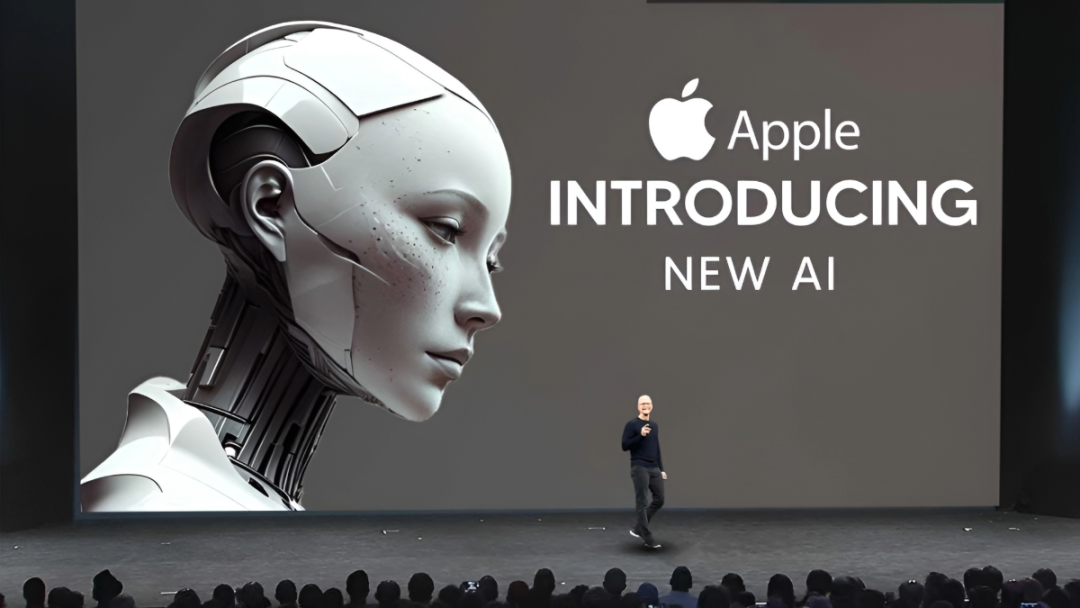
Cook recently announced that Apple plans to invest $500 billion over the next four years in artificial intelligence and chip research and development, marking the tech giant’s official entry into the AI race.
This massive investment is characterized by a clear “hardware-first” approach, which will be used to build 24 new factories and create 20,000 jobs. Among these, the AI server factory in Houston will produce dedicated “Apple Intelligence” servers equipped with in-house developed chips, aiming to reduce reliance on NVIDIA GPUs. In the second quarter of 2025, Apple’s capital expenditures surged by 61% year-over-year to $3.46 billion, with AI-related investments being the primary driver.
In terms of technological strategy, Apple is pursuing a differentiated approach focused on “privacy protection + edge computing.” The A18 Pro chip in the iPhone 16 uses a second-generation 3nm process, with the number of neural engine cores increased to 16. Machine learning processing speed is twice that of the previous generation, enabling it to run complex multimodal models locally. For tasks with high computational requirements, Apple innovatively introduced a “dedicated cloud computing” mode, encrypting and transmitting necessary data to Apple Silicon servers for processing, then immediately deleting it, balancing privacy and performance.
However, Apple still faces multiple challenges. In the fields of large language models and cloud computing, the parameter scale of its foundational models is only one-fifth that of GPT-4.5, and talent retention issues are hindering R&D progress. While the closed ecosystem ensures integration efficiency, it slows down access for third-party developers. Additionally, compliance requirements under the EU’s AI Act and user privacy demands create dual constraints.
Whether Cook’s bet succeeds depends on the depth of integration between AI technology and hardware products. Currently, AI features such as sleep apnea detection on the Apple Watch and spatial audio on AirPods have become product selling points, with 42% of iPhone users listing AI as the top factor for upgrading their phones. If Apple can achieve innovative breakthroughs in AI applications for Siri on Vision Pro within the next three years, it has the potential to reshape the AI competitive landscape in the tech industry.
Translated with DeepL.com (free version) Competition。